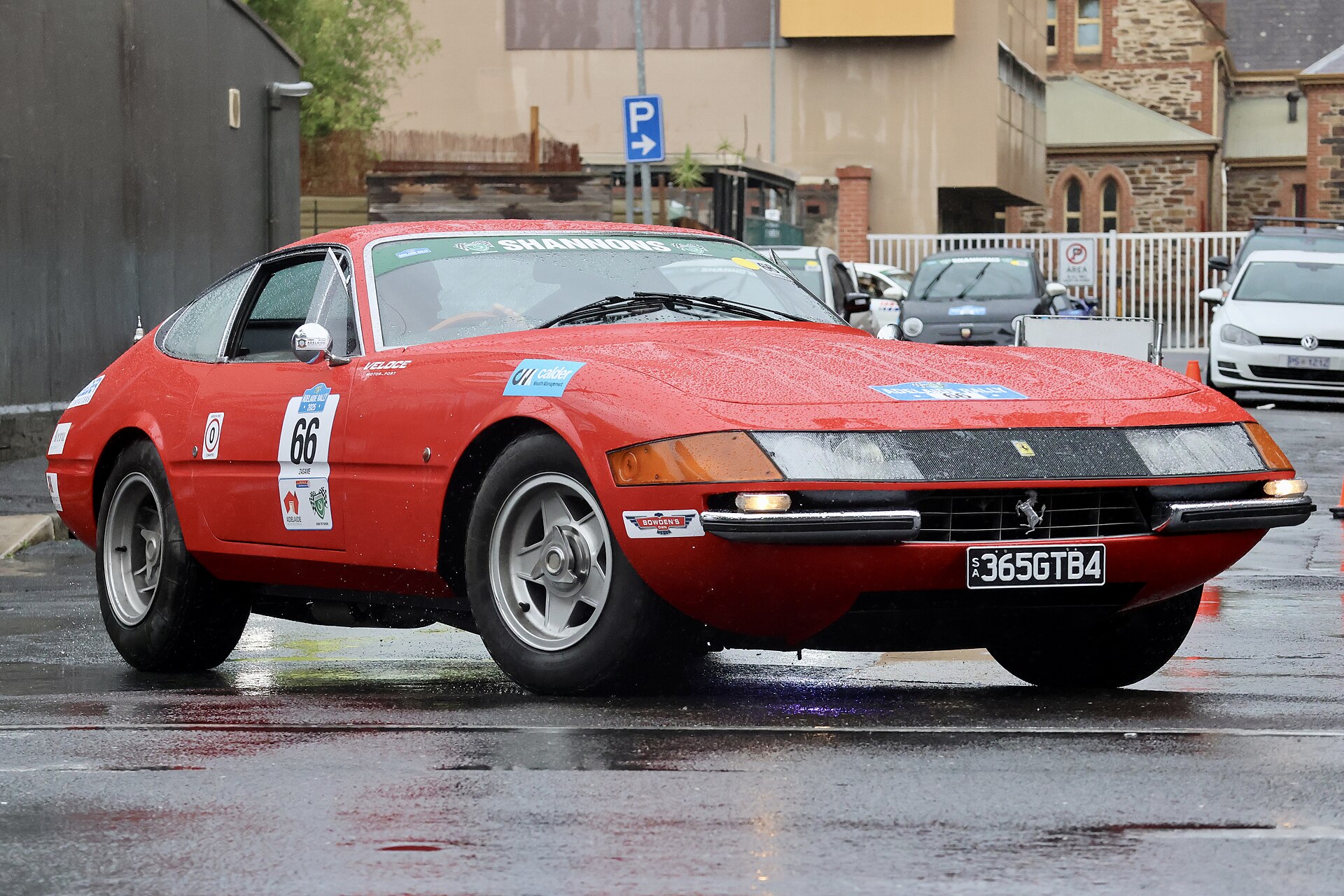
Five millimeters is what Leonardo Fioravanti asked Enzo Ferrari for while working on the Daytona. Five millimeters of track. Enzo gave him fifty.
I heard it in Andrew Potter’s conversation with Fioravanti for Masters of Design. Thirty minutes. The first episode of a series that records the people behind objects we recognize and authors we usually cannot name. Watch it first. I would not have written this without that conversation. This essay is what the interview made me look for: products that became great because someone protected a small decision.
Potter is on LinkedIn. Subscribe to the channel if you care about objects that outlast a launch. That is a recommendation, not a partnership.
In the recording, Fioravanti tells Enzo he wants five millimeters more track, because they measure in millimeters. Potter’s reading is not a change of unit. Enzo liked Fioravanti as a young engineer, could not see why five millimeters was such an issue, and said he would give him fifty. Fioravanti tells it as pride: through Pininfarina and the personalities of that office, he had a privileged relationship with Enzo. Print sometimes records the same meeting as six millimeters a side and six centimeters back. Potter heard fifty millimeters, and the access underneath it.
Potter also asks about a black line on the 308. Fioravanti answers with upper and lower, the part that lives with the road and the part that lives with the air. I took that as function. Get close to a 308 and the stripe has no mechanical job. Potter thinks he may have been seeing the Berlinetta Boxer, and that on the 308 the line is there to make the car look lower and to exaggerate the silhouette. Styling, arriving without a theory. Fioravanti is past eighty, speaking English. The interview is the source. The interpretation still has to stay light.
When the talk turns to decoration, Fioravanti still refuses the word styling. Beauty, for him, is the nobility of a truth: Plato, not a moodboard.
We do not build many products this way anymore.
We got better at producing. That is not the same as designing
Modern organizations are extremely good at making things quickly, cheaply, measurably, and at scale. That is a real achievement. It is also how a product becomes a basin: a vessel for whoever shouts loudest this quarter.
The process looks rational on a slide. Business sets a revenue target. Product writes a roadmap. Engineering reduces implementation cost. Marketing needs a new positioning. Sales needs a feature to close a deal. Design is asked to make the result usable and, if there is time, premium. Manufacturing cuts a millimeter of material because nobody will notice. Then the next version starts before anyone has lived with this one.
Each decision can be defended in isolation. Time-to-market is not vanity. Conversion is not a crime. Cost is not optional. The damage is local optimization. Nobody sits down to design a mediocre product. Mediocrity appears when every department solves its own problem and nobody is allowed to protect the whole object.
I spent years inside SaaS, fintech, and AI products watching this happen in software. A CEO wants growth. Sales wants a checkbox. A PM wants the roadmap closed. Engineering wants less complexity. Marketing wants a new noun on the homepage. Design tries to place all of it without making the product feel stupid. Five years later you have a sidebar, forty-seven features, an AI button, a dashboard, a settings graveyard, and a backlog of things nobody loves enough to delete.
Everyone did their job. The product got worse.
Nothing was supposed to look designed
George Lucas told Roger Christian he wanted a science-fiction western, not a chrome future. Christian, a British set decorator working out of London, already saw spaceships as oily cars that never left the garage. Lucas hired him on the spot.
Christian dressed the Millennium Falcon from bomber cockpits, submarine interiors, and scrap bought at London airfields because nobody else wanted it. The Stormtrooper rifle is a Sterling submachine gun with a sight stuck on backwards. Han Solo’s blaster started as a Mauser C96. The galaxy looks used because it is made of used things.
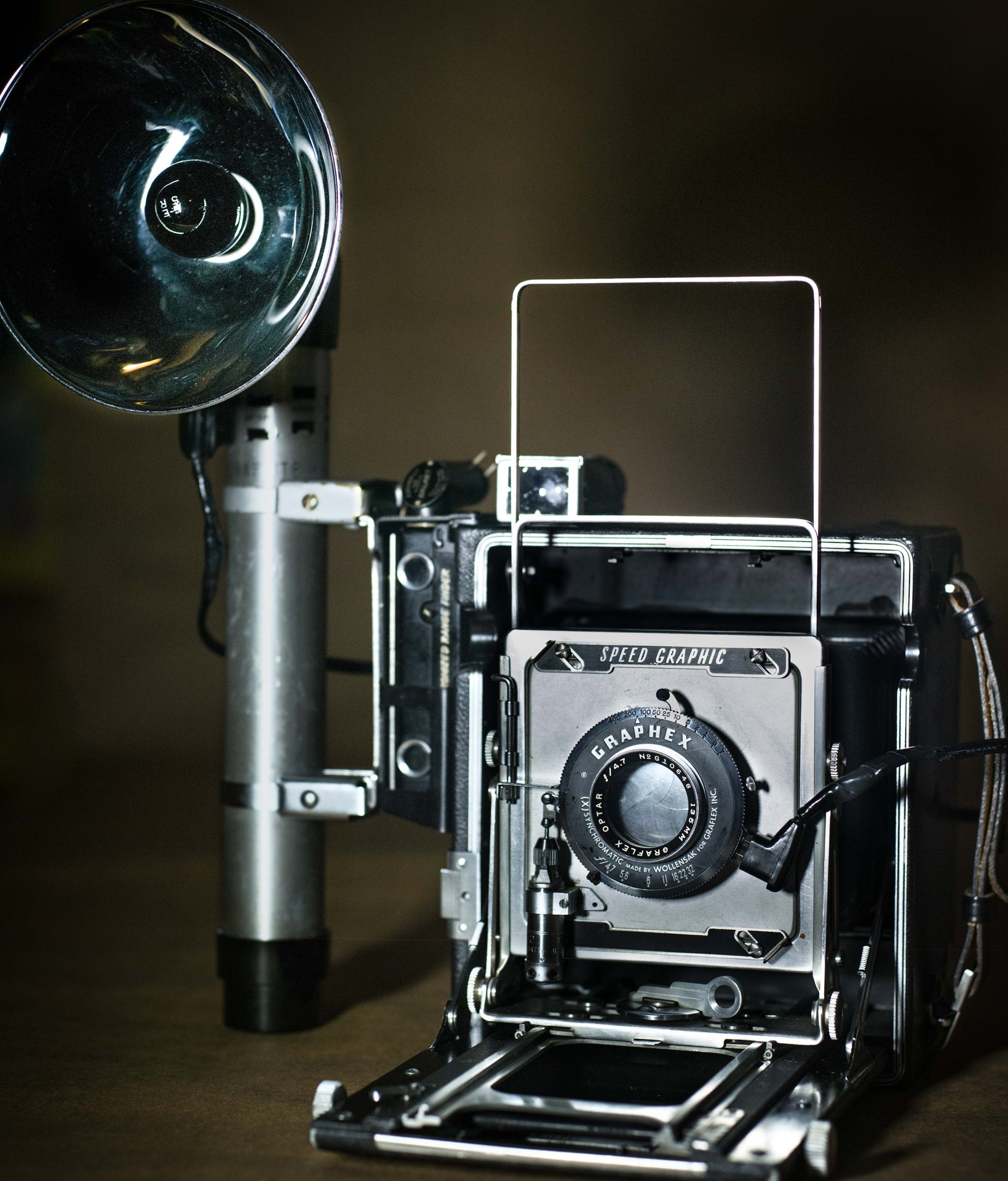
Luke’s lightsaber is the clearest product story in the film. Running out of time before Tunisia, Christian asked a photographer’s shop in London’s West End for anything odd. In a dusty box he found Graflex 3-cell flash handles, built for Speed Graphic press cameras. Chromium. A red fire button. Real weight. He glued T-track to the grip, a D-ring for the belt, calculator parts on the clamp. About eight pounds sterling. Lucas held it and smiled. That was approval.
The handle is still the handle. The original decision was not styling a weapon. It was recognizing that a press photographer’s flash already had the right mass, the right click, the right chrome. Function first, then the myth.
A communicator you can hold
Star Trek did the opposite of used-future and still arrived at a product. Matt Jefferies drew the Enterprise as a diagram of imaginary physics: a hull for people, nacelles for warp, a neck that could break off and leave the crew alive. The ship looks inevitable because it is a package.

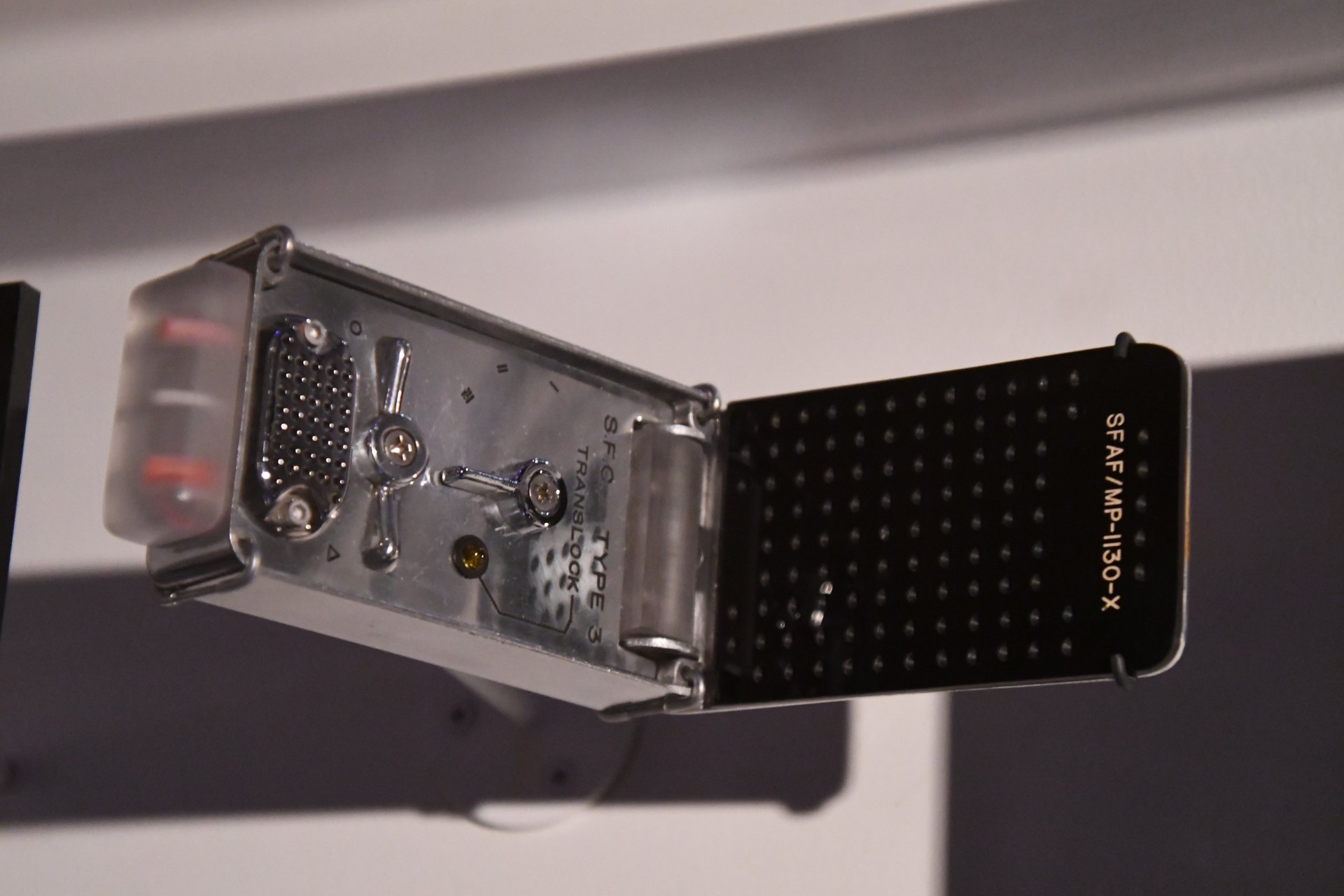
Wah Chang, working cheap for Desilu, built the communicator Kirk flips open. Two hero props with a stopwatch spinning a moiré disk. Eight dummies for the stunts. A clamshell you operate with one hand, a grille, an antenna that is also a lid. The lot cost about a thousand dollars.
Thirty years later Motorola shipped the StarTAC. Journalists compared it to Kirk’s communicator without asking the fiction for permission. The lesson is not that science fiction predicts gadgets. It is that a handheld object with a single obvious gesture will outlive the plot around it.
The objects that will outlive us
Some products survive the companies, the fashions, and the original owners. They do it for boring reasons. Every part still has a job. You can repair them. The proportions were solved, not restyled every two years for a keynote. Identity was allowed to evolve instead of being detonated for novelty.
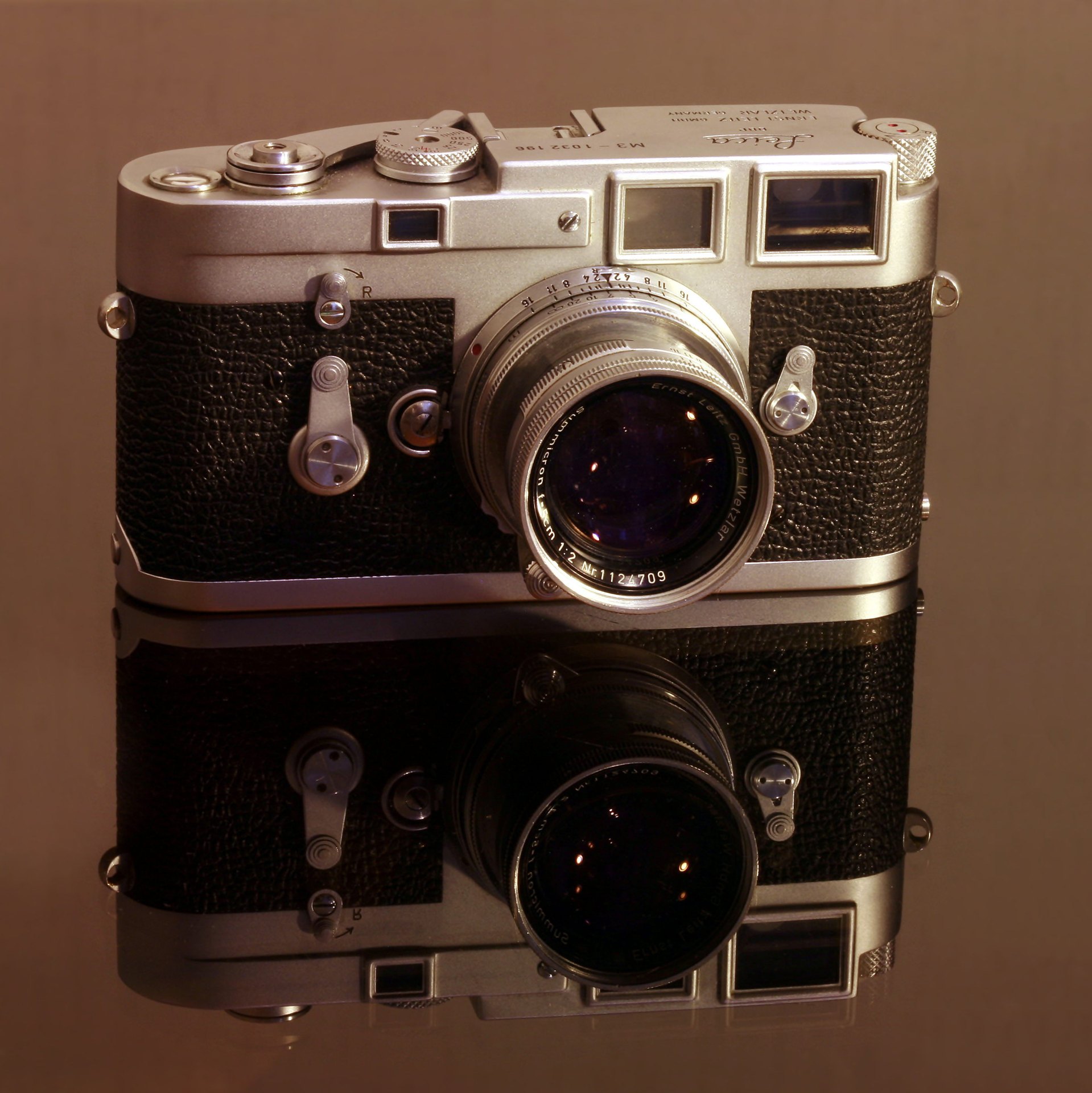
The Leica M3 arrived in 1954 and still defines what a rangefinder is supposed to feel like in the hand. The viewfinder, the load, the shutter, the absence of a computer pretending to be a camera. Later M bodies changed, but they did not throw away the contract. You can pick one up after seventy years and know where your thumb goes.
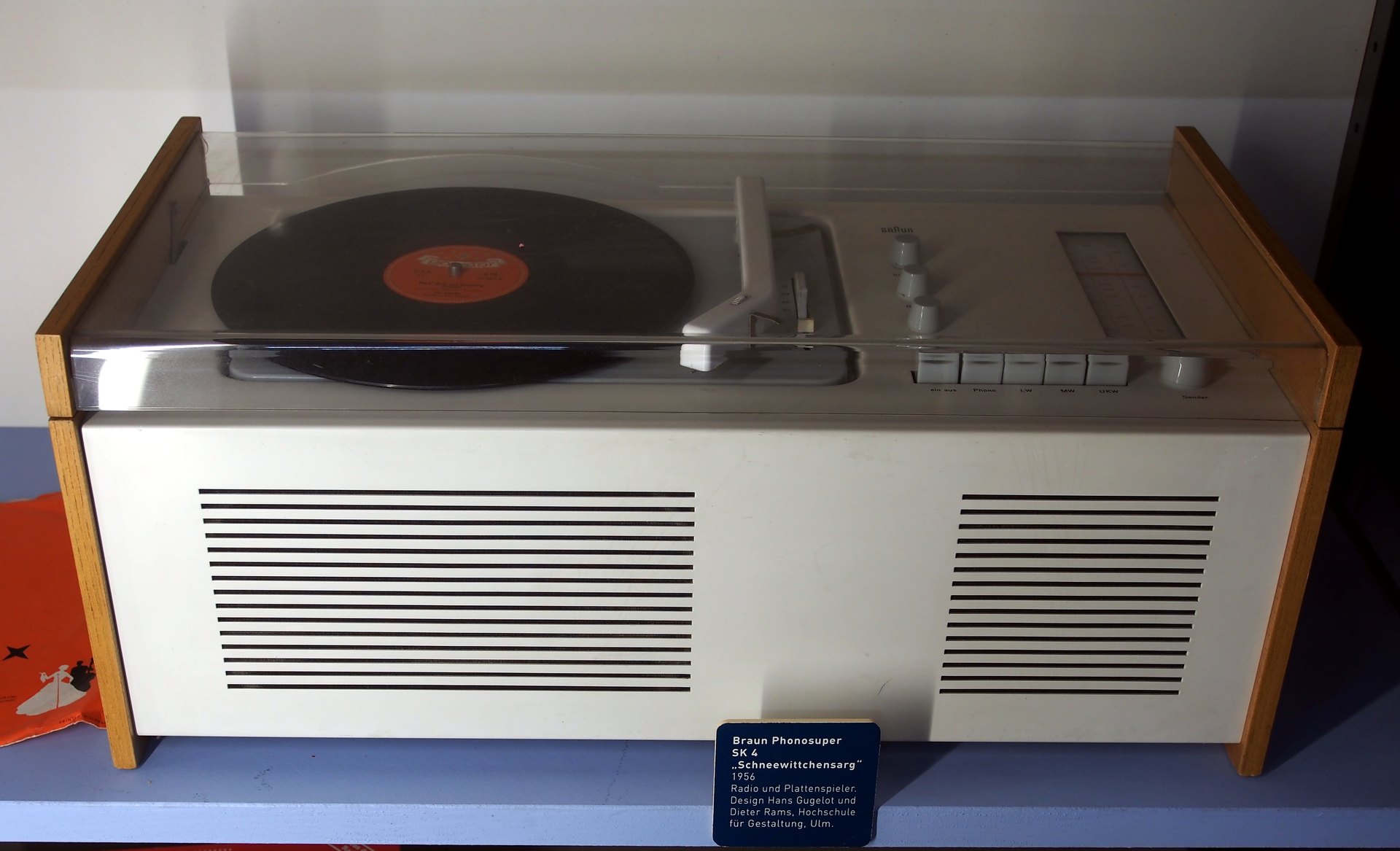
Dieter Rams and Hans Gugelot’s Braun SK 4 of 1956 put a clear lid on a radio-phonograph so you could see the mechanism. Rams later wrote that good design is honest, long-lasting, and thorough down to the last detail. He also wrote that it is as little design as possible. That is not a moodboard. It is a refusal to add a second story to a product that already works.
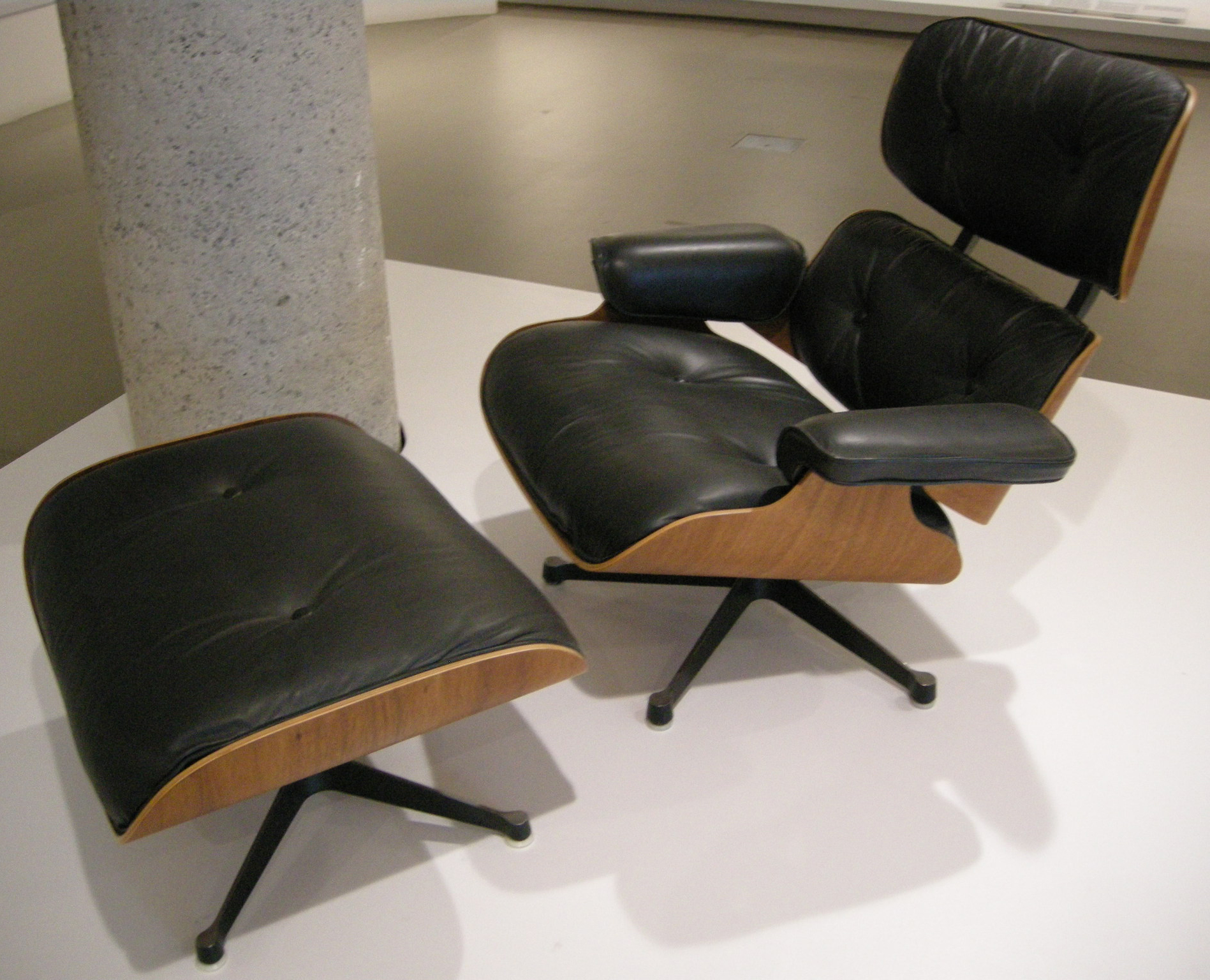
Charles and Ray Eames’s Lounge Chair of 1956 is still made. Molded plywood shells, leather, a swivel that behaves like a tool. Charles compared it to a well-used first baseman’s mitt: warm, receptive, broken in rather than launched. Herman Miller still sells it because the object never depended on looking new.
The Mini of 1959 is the packaging argument in steel. Alec Issigonis put the engine sideways and the gearbox in the sump so about 80 percent of the floorplan could belong to people. Ten-inch wheels. Sliding windows so the doors stayed thin. External hinges so the cabin stayed wide. It looks like a toy until you sit in it. Then it feels like a room that learned to drive.

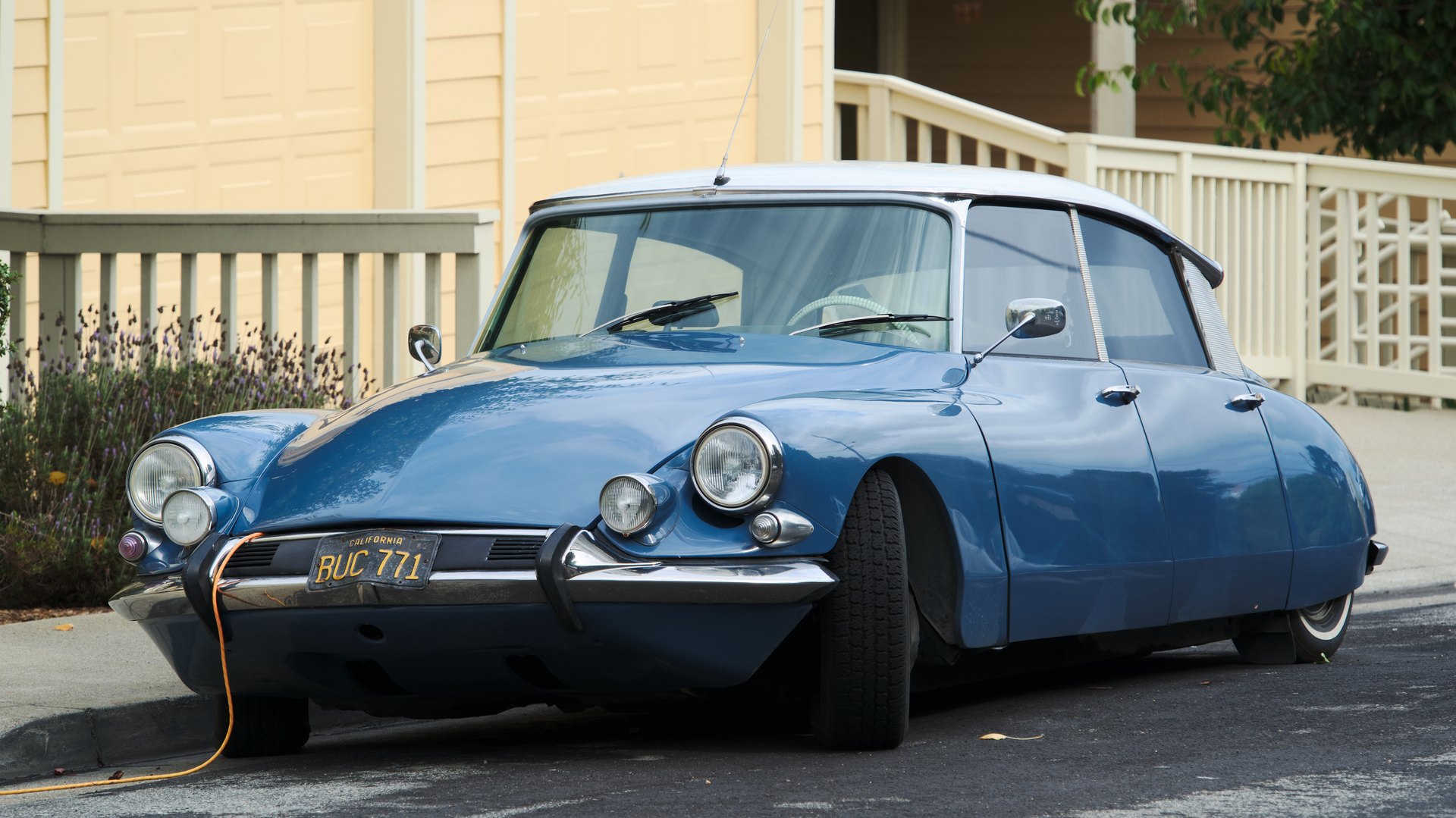
The Citroën DS of 1955 still surprises people who think beauty is a skin. Hydropneumatic suspension that self-levels. A single-spoke wheel so a crash does not spear the driver. A mushroom brake pedal. Covered rear wheels because the air asked for them. Flaminio Bertoni, André Lefèbvre, and Paul Magès built a car that behaves like a different species. The line is famous because the engineering is strange.
The Porsche 911 has been in production since 1964. Engines, crash structures, lights, and interiors have changed. The silhouette was allowed to thicken and sharpen without becoming a different animal every generation. That is not conservatism as a brand value. It is the rare discipline of evolving a package instead of commissioning a new identity because the marketing calendar is hungry.

The Mini argument is being won in China
The floorplan fight did not stay in 1959. Chinese electric cars are taking the Issigonis brief and stretching it: battery in the floor, wheels at the corners, a cabin that is a room. A three-meter wheelbase is a decision you can sit in. The work that counts is package, reach, and how you refill the energy.
Zeekr’s 001, designed in Gothenburg on Geely’s SEA platform, is a shooting brake with a 3,000-millimeter wheelbase and short overhangs. Stefan Rosén’s team said that length could have looked awkward, so they pulled the roof back for rear headroom and sloped it for air. Rear passengers get the volume. The shape is what the package left.

Xiaomi’s SU7, led by Li Tianyuan after BMW, uses the same 3,000-millimeter wheelbase in a sedan just under five meters long. There is no engine to house, so the overhangs shrink and the cabin moves into the space that used to be a bay. The millimeters that matter sit between the axles.

Li Auto treated the Chinese family highway as the job. The L9 is an extended-range six-seater: captain’s chairs in the second row, a fridge in the console, a third row meant for people. Parents sit in the back with children for eight hours. Western road tests still write about the driver. Li Xiang built the car for the people behind him.

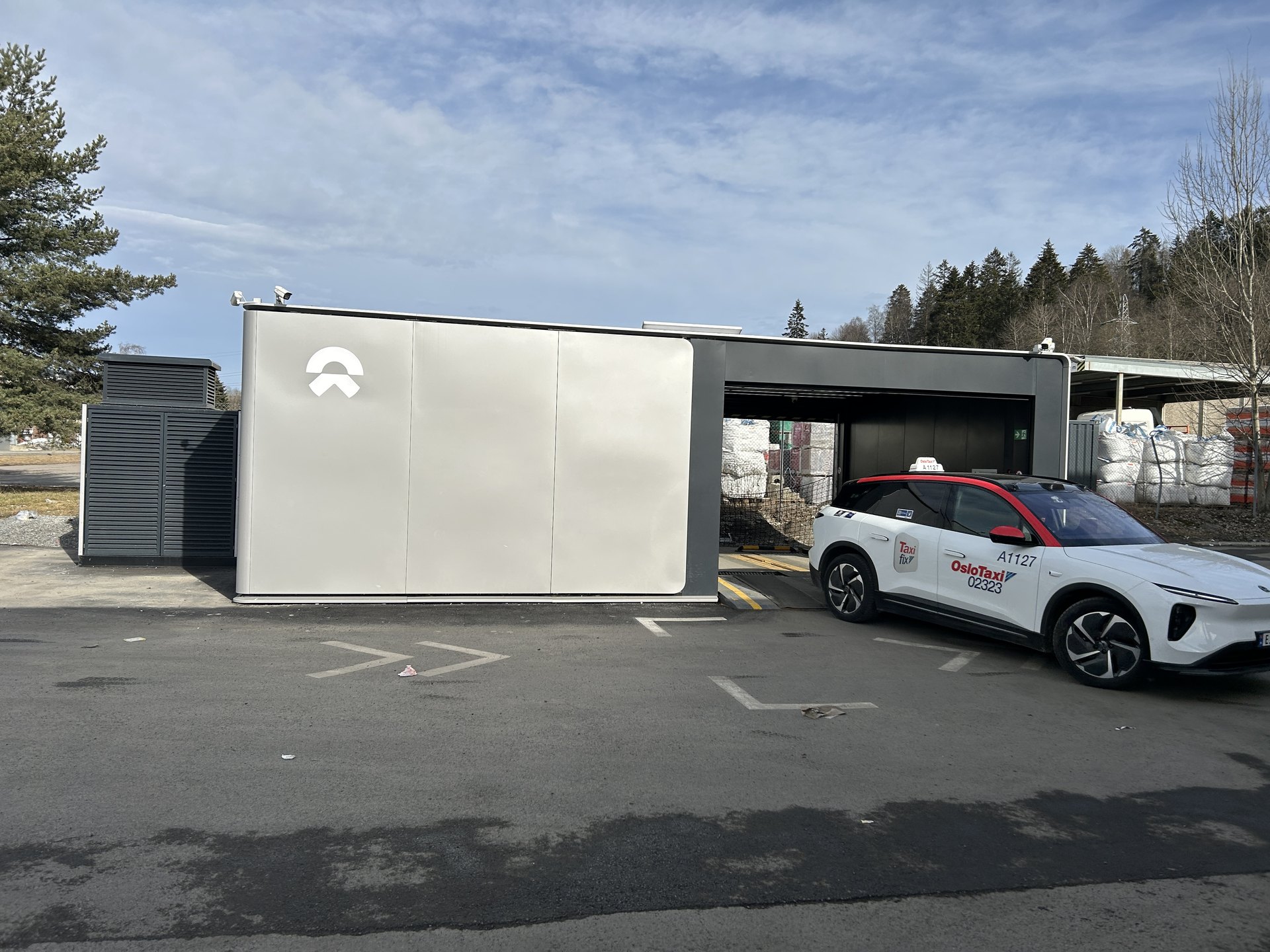
NIO treated energy as a cassette. You do not wait forty minutes and call it filling a tank. You swap the pack. A Power Swap Station does it in a few minutes. The later liquid-cooled charge cable, light enough to hold in one hand, is the Anglepoise move: the mechanism you actually grip. Battery as a service is a refill system, not a trim level.
The smaller Chinese answer is more literal. XEV’s Yoyo, designed in Turin and built in China, puts three lithium-iron-phosphate packs behind the rear bumper. At a swap cabinet the cassettes come out in minutes. You change boxes you can lift. The millimeters are the latch and the weight of a pack: energy small enough to hold.

Hands, springs, and a chair that grows
The same obsession shows up where there is no hood to photograph. A handle. A spring. A fold. A thumb pad.
Sam Farber watched his wife Betsey try to peel apples in Provence with arthritis in her hands. The peeler had not changed in decades. In 1990, with Smart Design in New York, that frustration became OXO Good Grips. The first prototype was a metal peeler shoved into a bicycle handlebar grip. The production handle is oval so it cannot spin in the palm, Santoprene so it stays put when wet, and finned like a tire so each hand finds its own purchase. They tested with an arthritis group and then sold it to everyone. Inclusive design that does not look like a medical device. MoMA took the prototypes. The millimeters here are the diameter of a grip.
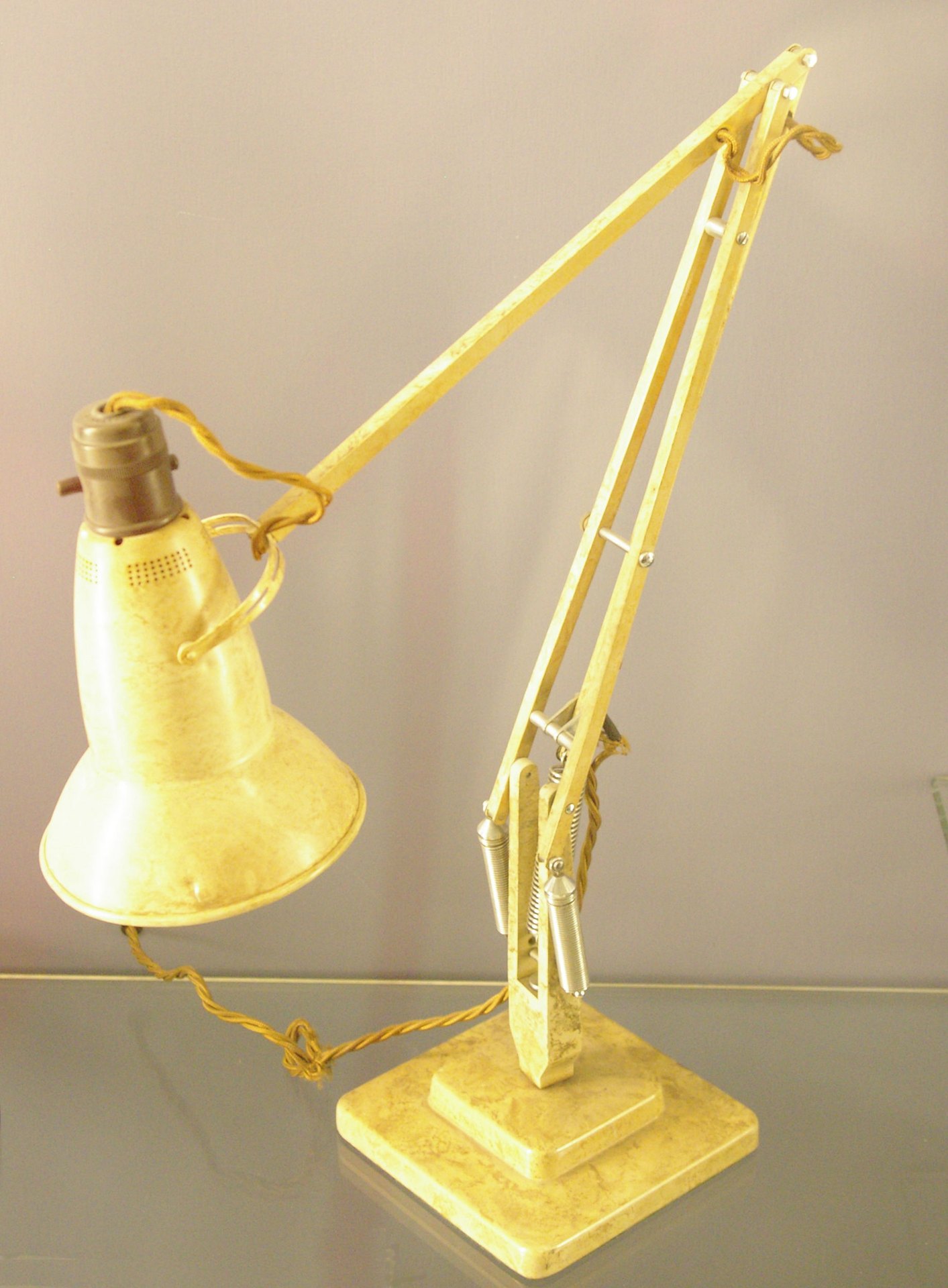
George Carwardine was an automotive engineer, not a lighting stylist. In the early 1930s he invented a spring that could hold a mass in any position. He put a bulb on it. The Anglepoise 1227, 1935, still does the job: three springs, a joint like an elbow, light exactly where the work is. No lock. No clamp. You move it with two fingers and it stays. Factories got it first. Then desks. Pixar later borrowed the silhouette because the mechanism already looked like a character.
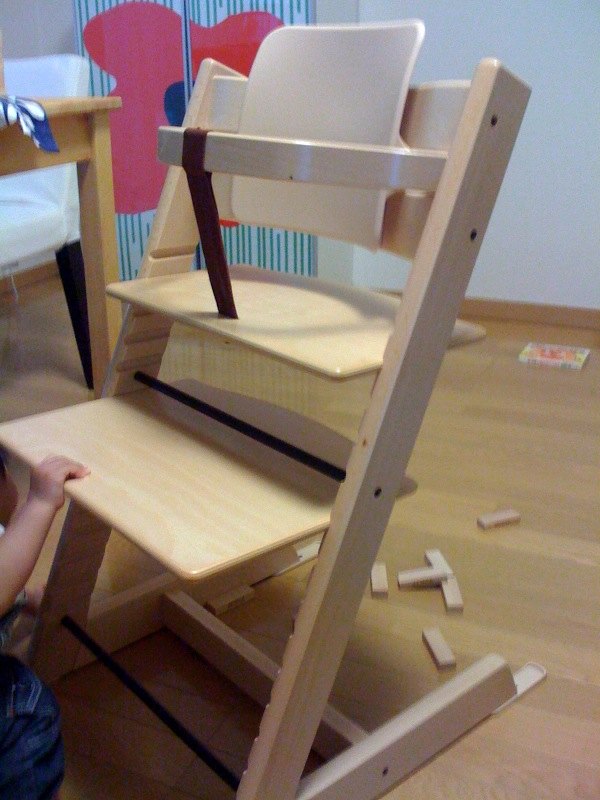
Peter Opsvik watched his son Tor outgrow a high chair and still fail to reach an adult table. The Tripp Trapp of 1972 is one chair with a seat and a footrest that climb the frame. Infant, child, adult, same dinner. The product is the groove. MoMA keeps one. Families keep them for thirty years because the object was allowed to change size instead of being replaced.
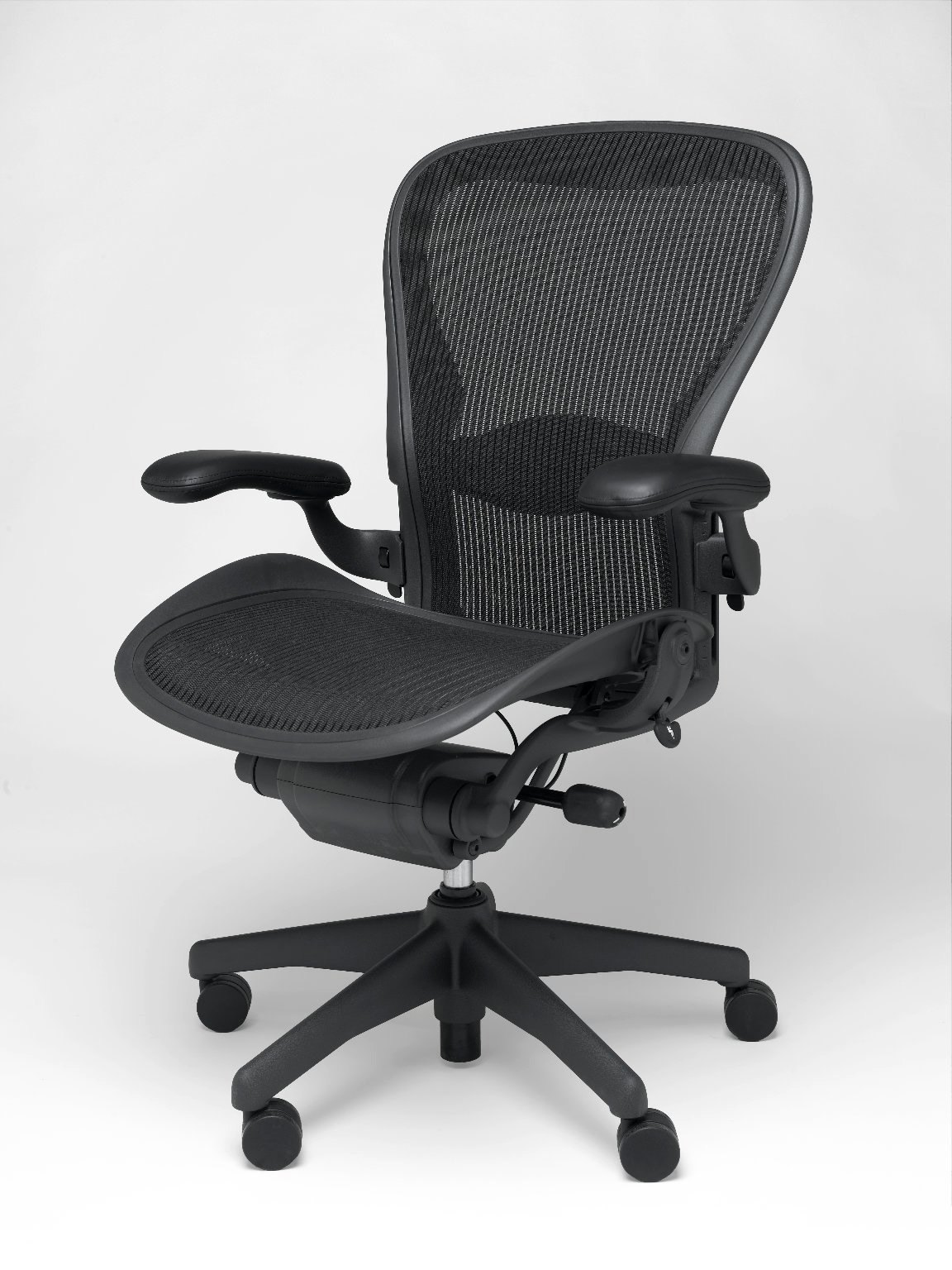
Bill Stumpf and Don Chadwick’s Aeron of 1994 threw out foam. Pellicle mesh lets the body breathe. Sizes A, B, and C, because people are not one percentile. They started by watching older people sit for hours, then applied it to offices. Comfort as the absence of awareness: you stop noticing the chair. That is ergonomics, not a lumbar slogan on a box.
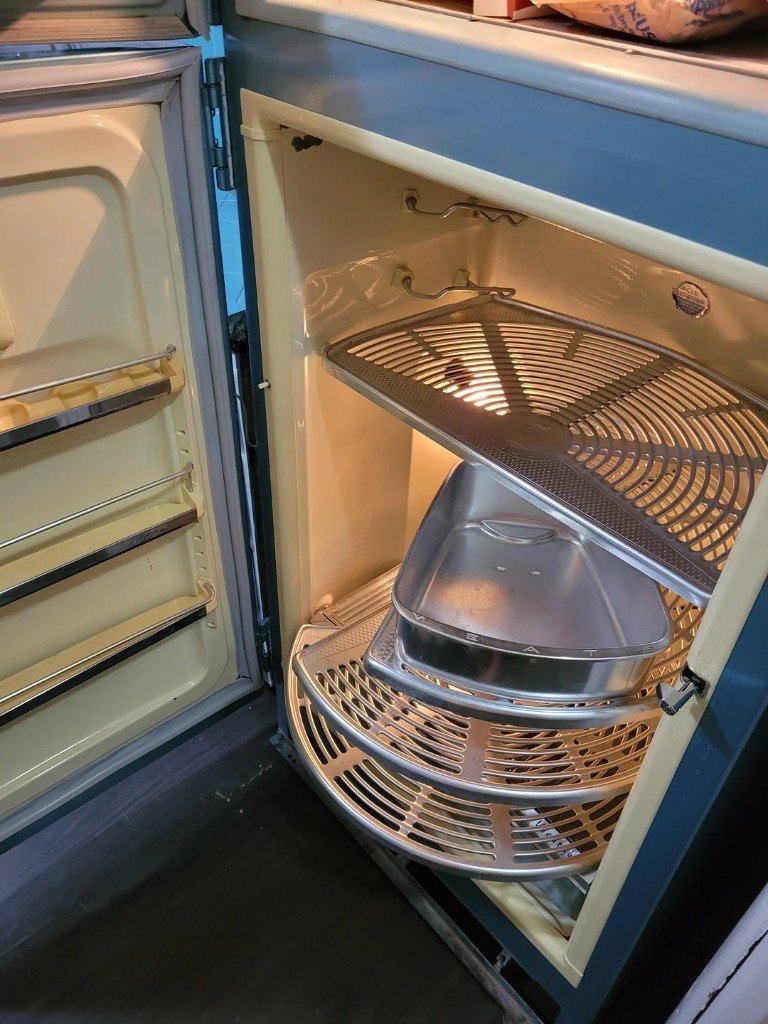
The kitchen had its own millimeters. In the mid-1950s General Electric sold a refrigerator whose shelves were not a stack of rectangles. They were circular aluminum trays on a post. You turned them like a lazy Susan. Jars at the back came to the front. A stamped MEATS pan sat on one shelf. GE said the revolving shelves put food at your fingertips and added about 15 percent more shelf area than the old rectangles. The last year for the full carousel was 1958. In 1959 the shelves swung out instead. The millimeters are the radius of the tray and the gap to the liner: enough to spin a bottle, not enough to waste the box.
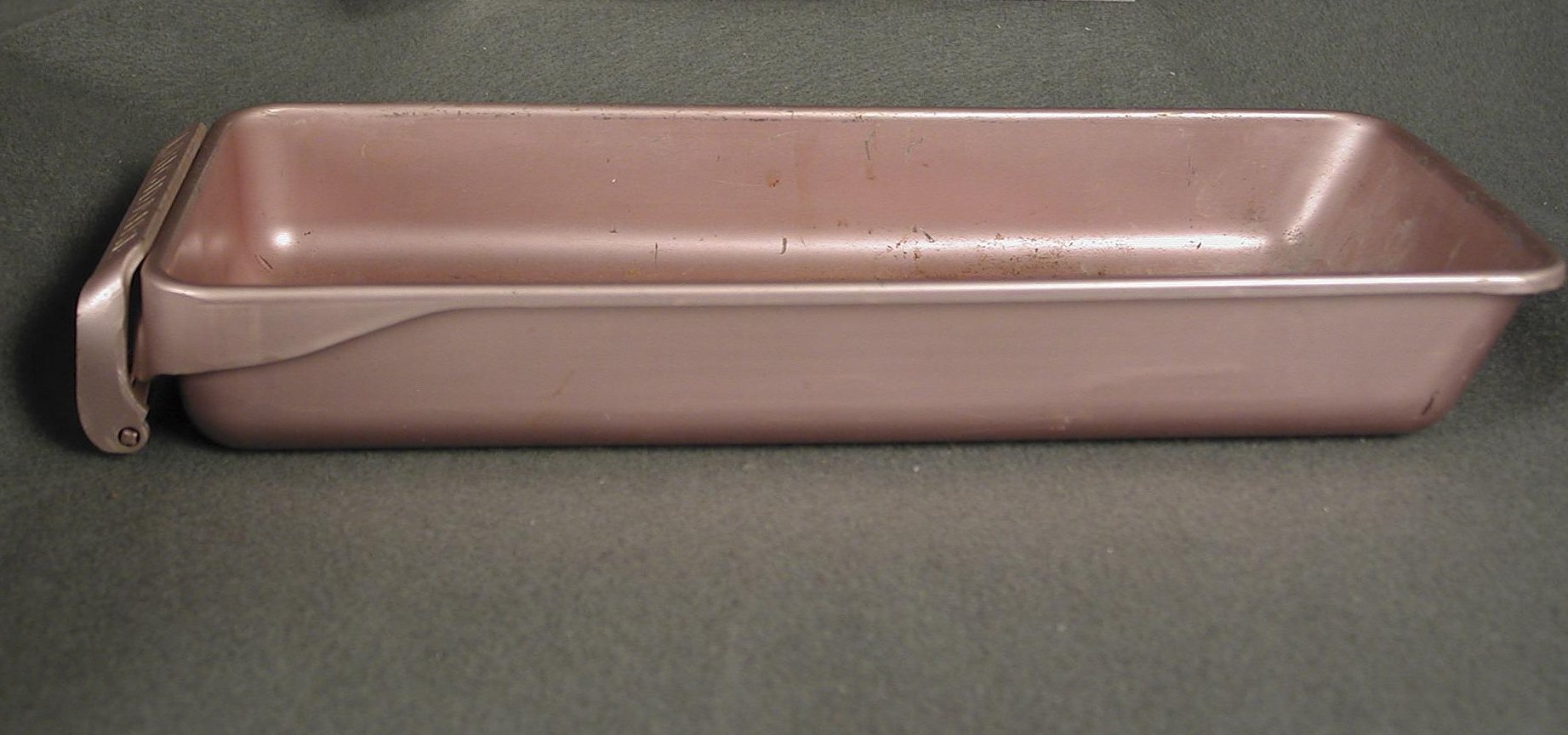
Ice fought the tray. Aluminum ice cube trays froze cubes to the metal. Edward H. Roberts, a GE engineer, filed the lever-release tray in 1949. A pull shifted the grid, cracked the bond, and dropped every cube at once. Frigidaire sold it as Quickube. Others stamped Quickout on the handle. The product is the release, not the cube. Plastic trays later deleted the lever and the crack. The millimeters are the travel of that handle.
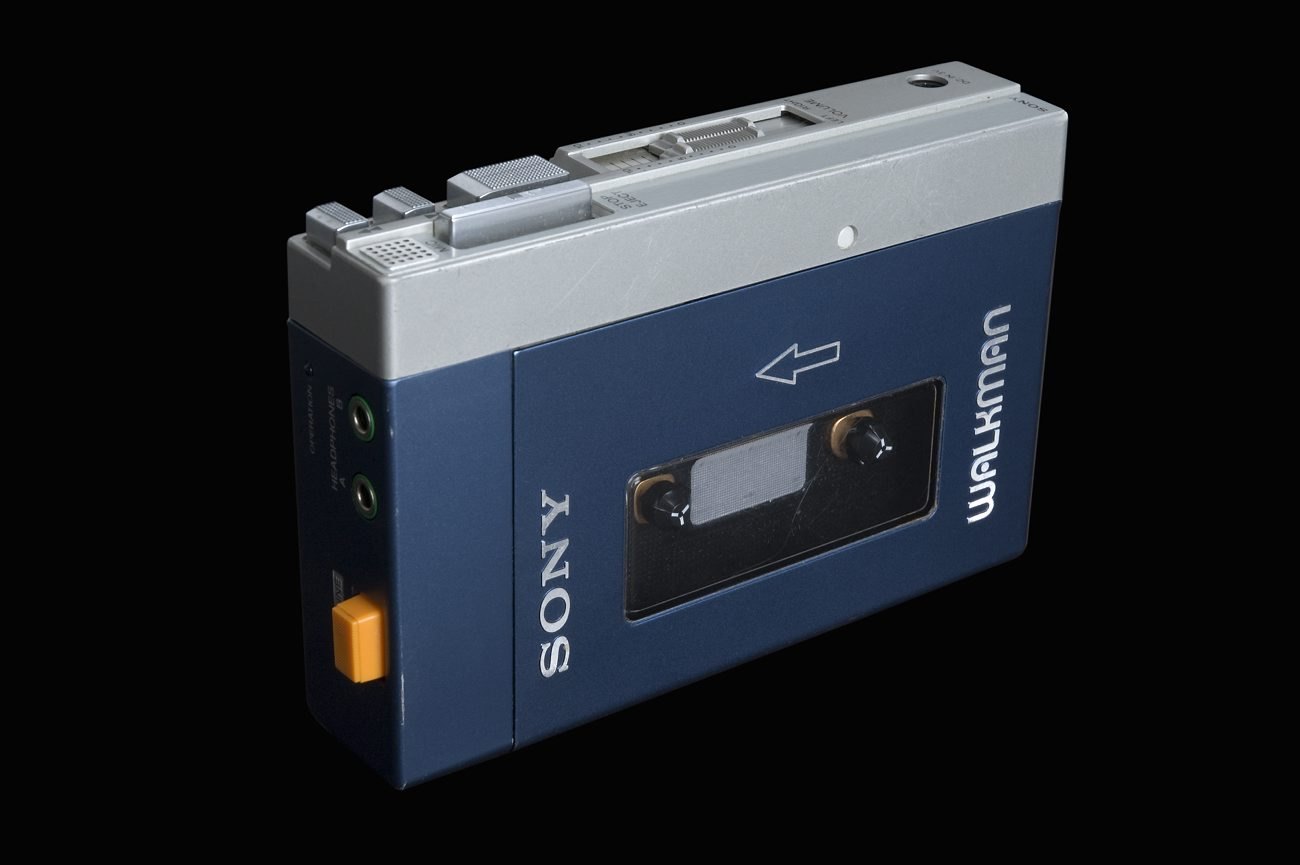
Sony’s Walkman TPS-L2 of 1979 is a study in what to delete. Recording went. The speaker went. What remained fits a pocket and lasts on batteries. Akio Morita still feared isolation, so the first model has two headphone jacks and an orange hotline button that ducks the tape and opens a microphone. Listeners ignored the social hardware. Sony dropped it. The millimeters that survived were the ones that made private sound portable. Even the discarded jacks were a real argument about how a product should sit in a life.
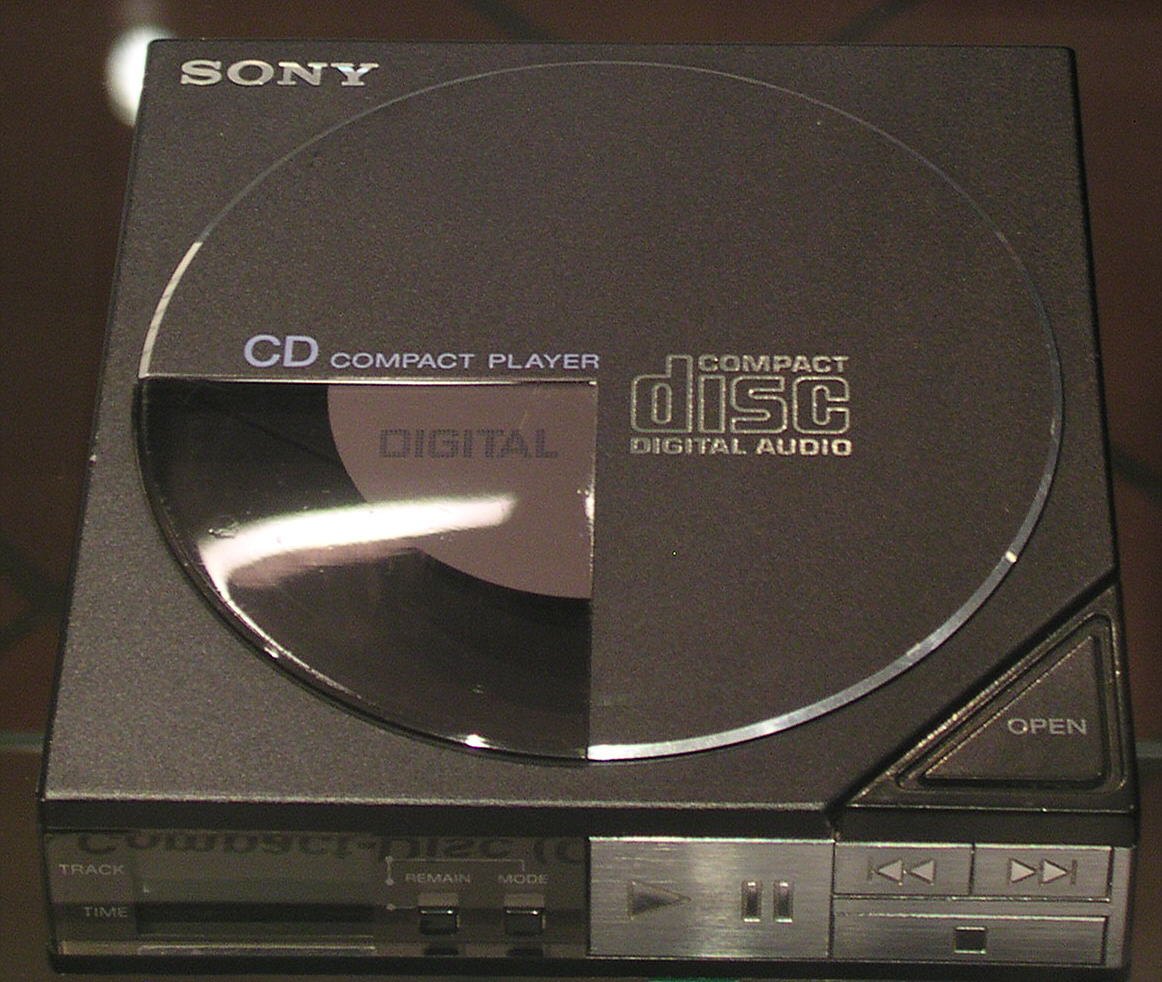
Five years later the cassette was not the format. Sony’s D-50 of 1984, sold first as a Compact Disc Compact Player and remembered as the Discman, had to be a CD player you could carry. Published accounts say Kozo Ohsone walked into a meeting with a block of wood about 13 centimeters square and 4 centimeters thick, the size of four jewel cases stacked, and told the team to make that object produce sound. The laser, the chips, the mechanism had to shrink to a dimension someone could hold. The first portable CD player is a packaging brief that became a product name.
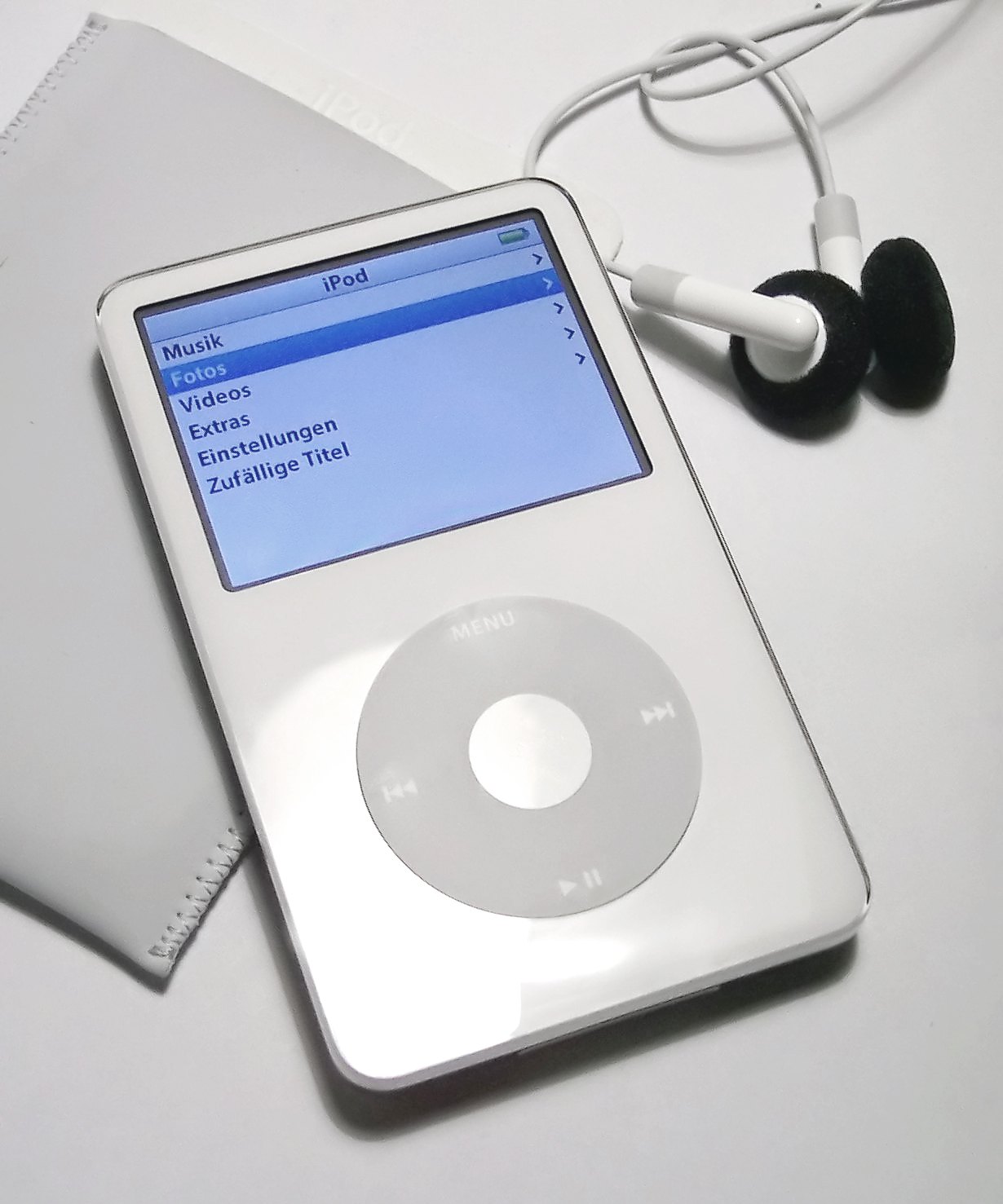
The later player deleted the disc. Apple’s iPod, from the click-wheel years, put a thousand songs under one thumb. A capacitive ring. Four marks. A center button. You did not hunt for a key. You rolled. The millimeters are the diameter of that wheel and the gap around it: enough to find by touch, not enough to rattle. Old players argued with batteries, cassettes, and spinning plastic. The new one argued with a list. Same job. Different refusal.
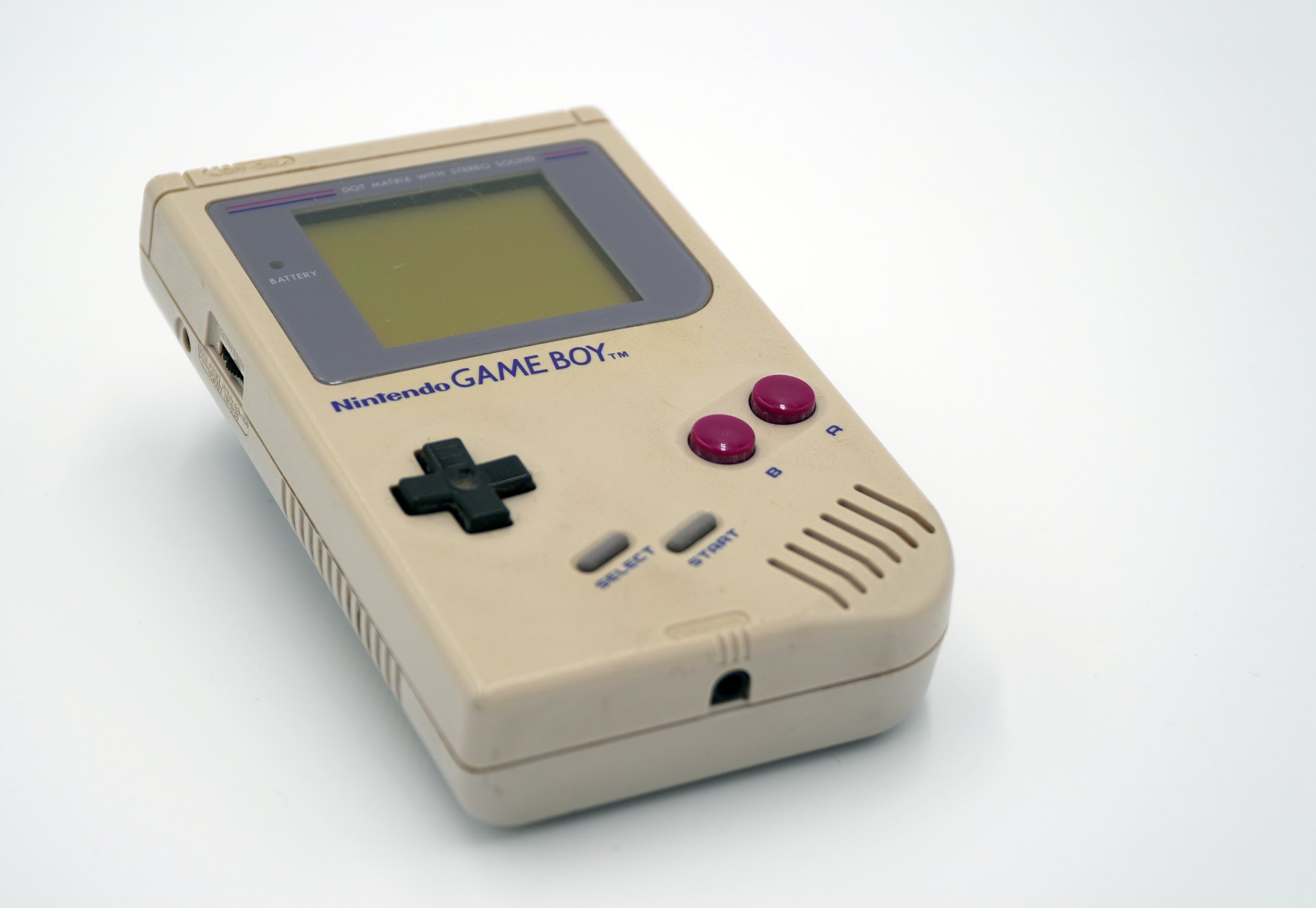
Gunpei Yokoi put four directions under one thumb. The D-pad on the Game Boy is the same cross he patented for Game & Watch. Yokoi called the method lateral thinking with withered technology: cheap, known parts, arranged so a child can play for thirty hours on AA cells. The screen was not the best. The object was. Every handheld since still owes that plus-shaped millimeter of travel.
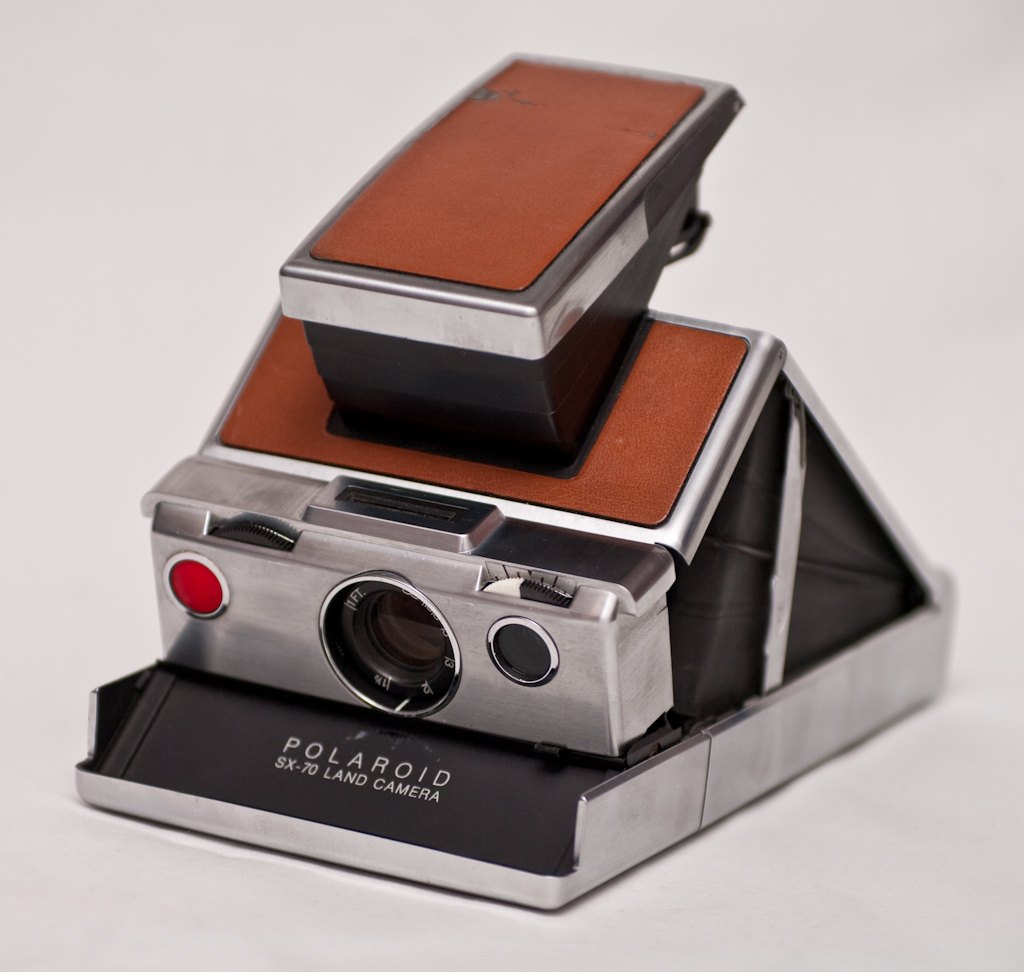
Edwin Land’s Polaroid SX-70 of 1972 folds like a book and becomes an SLR that develops in daylight. Optics, chemistry, and a bellows in one hinge. You do not go to a lab. You wait and watch the image arrive. The surprise is not nostalgia. It is a complete photographic system reduced to a thickness you can put in a bag.
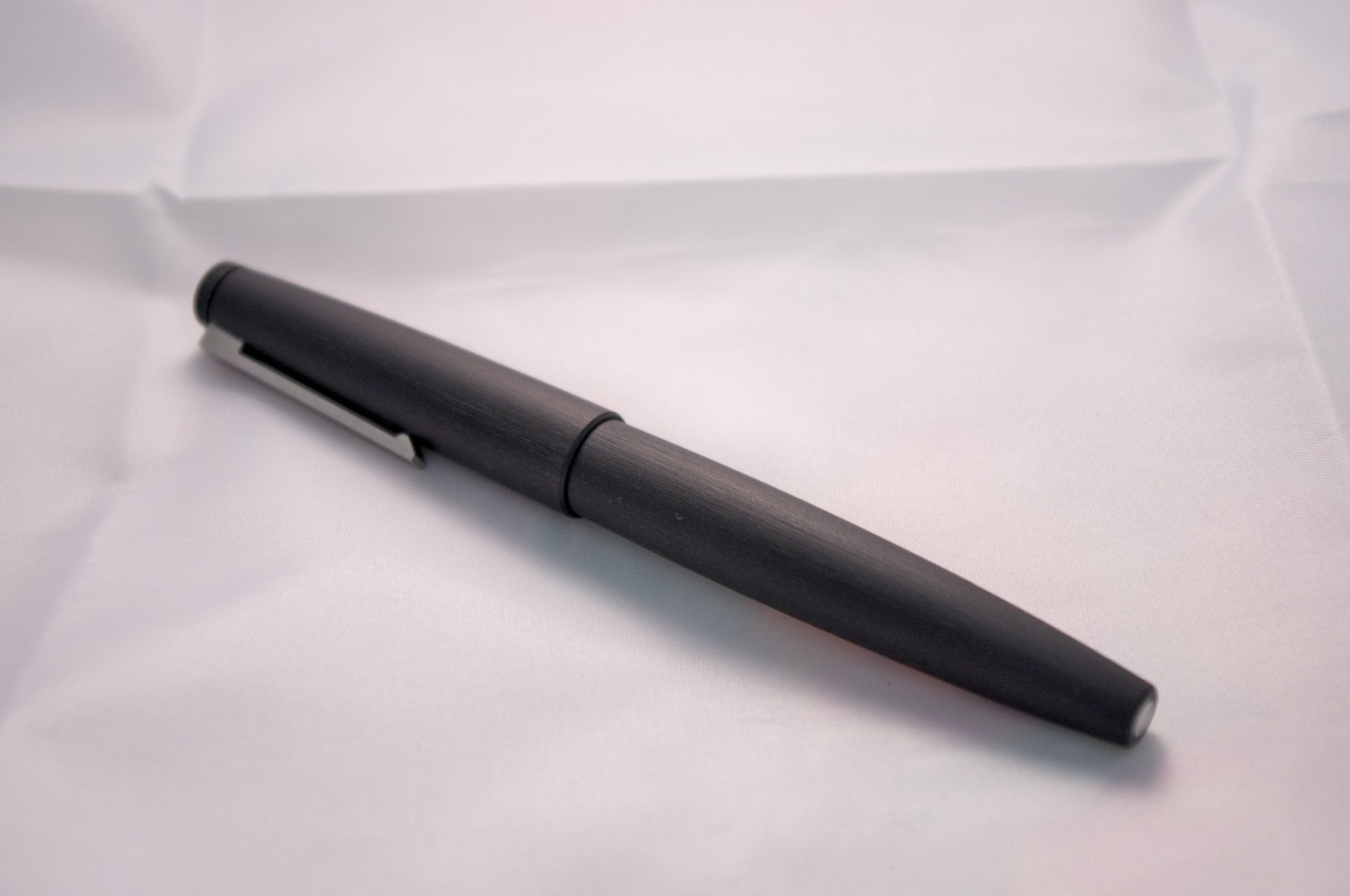
The Lamy 2000 has been in production since 1966. Gerd A. Müller, who had designed at Braun, put a piston filler inside Makrolon, a hooded nib, a snap cap that clicks at a known pressure. No logo shouting. The clip is a piece of spring steel. You can still buy the same contract. That is what long-lasting actually looks like on a desk.
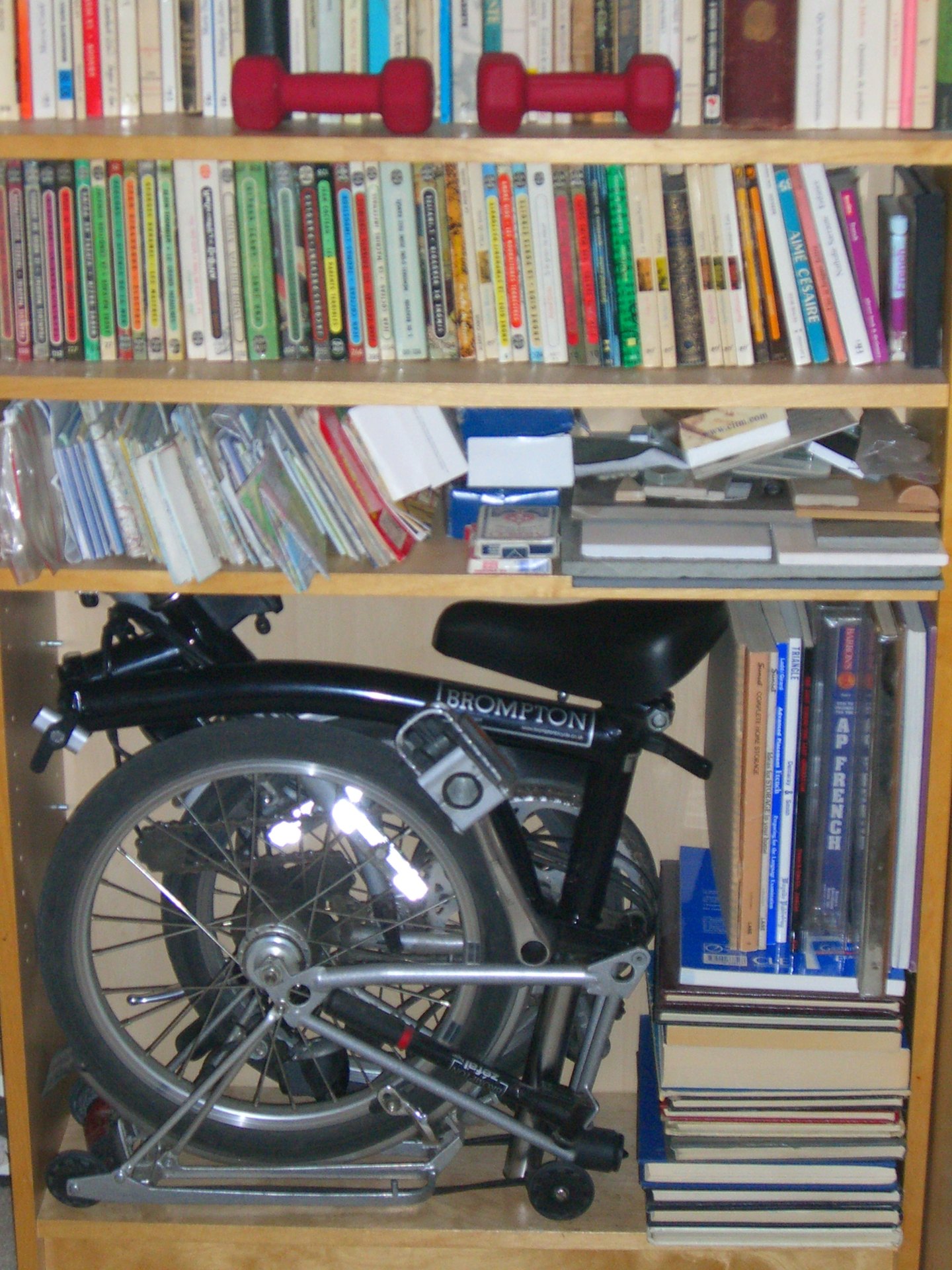
Andrew Ritchie’s Brompton is a folding problem solved in three dimensions. Hinges, 16-inch wheels, a final flick of the rear wheel. The bike is the package. A commuter object that fits a bookcase is the Mini argument without a body shop.
Fioravanti’s Ferraris belong on that shelf, as one case among others. I wrote earlier about what happens when Ferrari forgets that contract. Identity is not a mood. It is the accumulation of decisions nobody was allowed to call too small.
Business is not the enemy
Ferrari sold cars. Pininfarina was a company. Braun, Leica, Porsche, BMC, and Herman Miller were not monasteries. Lucasfilm had a budget. Desilu had a cheaper one. Roger Christian made a lightsaber for about eight pounds. Wah Chang invoiced about a thousand dollars for ten communicators. Profit is not the original sin.
The conflict is shorter. Long-term product value against short-term optimization. You can cheapen a material and make this quarter easier. You can ship a feature because Sales is in the room. You can dark-pattern an extra click of engagement. You can restyle the whole surface every two years so the launch deck has a before-and-after. Each move is rational. Twenty years later the object is landfill, or a settings page nobody can explain.
Enzo’s gift, in Fioravanti’s Daytona story, was not taste as a vibe, and it was not agreement about five millimeters. Potter’s reading is that Enzo could not see why the small number mattered, so he gave fifty, and Fioravanti still tells it as access. Lucas’s gift to Christian was different in kind and similar in effect: a director who would hold a found flash handle and not ask for a sketch first. That is a business skill. Most companies have the inverse: a process that can only hear a metric.
What is five millimeters in a digital product?
In software the millimeters are rarely visible in a screenshot. They are the extra confirmation that trains people to click without reading. The loading state that lies. The error that blames the user. The settings page that exists because two teams would not share a model. The AI button that was added because every competitor added one, and now it sits there generating text nobody asked to keep.
A SaaS product becomes a basin the same way a spaceship becomes chrome. The CEO protects growth. Sales protects the deal. The PM protects the roadmap. Engineering protects the ticket count. Marketing protects the category story. Design protects usability, which often means making the pile easier to click rather than smaller. The pile is the product.
The digital equivalent of Fioravanti’s track width is the thing you are told does not matter: eight pixels of tap target, a verb in a button, a default that ships people into the wrong plan, a permission dialog that appears after they have already committed. None of those will show up on a quarterly dashboard as “the five millimeters.” They show up later as churn, support load, and a UI that can only grow.
Restraint is the expensive part. Saying this should not exist, when producing it costs almost nothing, is now the job.
AI makes production cheap. Judgment gets rarer
Interfaces, copy, prototypes, and visual concepts can be generated in an afternoon. Execution is less scarce than it was when Fioravanti was sanding a full-size Daytona, or when Christian was gluing T-track onto a flash handle. That does not retire the philosophy. It makes it harsher.
When another feature is nearly free, the scarce skills are taste, sequence, and refusal. Knowing why a control exists. Knowing that a generated “premium” gradient is costume. Knowing that an AI panel which duplicates search is frontal area: more drag, no more speed.
I do not think the answer is to romanticize clay models or dusty boxes in camera shops. The answer is to keep one person, or one small group, with the right to say the millimeters matter when every other function has a reason to shrug.
Then find the book
If the interview is the voice, the primary text is Fioravanti’s own Il Cavallino Nel Cuore, published by Giorgio Nada: sketches, packaging drawings, and a first-person account of Pininfarina. Christian’s Cinema Alchemist is the parallel for Star Wars: how a used universe is built from scrap, not from a style guide. Those are the sources. Potter is the person who went to Turin, sat down, and made the thinking public again.
The millimeters still count
Great products are not one brilliant decision. They are hundreds of small refusals. The five millimeters matter. The flash handle matters. The peeler grip matters. The revolving shelf matters. The ice-tray lever matters. The D-pad matters. The click wheel matters. The fold of a bike matters. The three-meter wheelbase matters. The button matters. The feature you did not ship matters.
A product becomes disposable when enough people inside the company decide that their five millimeters are someone else’s problem. Fioravanti’s lesson, and Christian’s, and Chang’s, is simpler than a design manifesto. If nobody in the room is allowed to fight for the small dimension, you are no longer designing. You are producing a basin, and hoping the next version will look like a product.
Sources
The interview at the center of this essay is Andrew Potter’s Masters of Design conversation with Leonardo Fioravanti (YouTube, 2026; Potter describes it as thirty minutes, episode 1). In that recording Fioravanti asks Enzo for five millimeters of track. Potter later clarified the answer: Enzo gave fifty millimeters. The point of the story, in Potter’s reading, is a privileged relationship, not a change from millimeters to centimeters. A published version in alVolante records six millimeters a side and a six-centimeter answer. The later C-pillar remark, not in this interview, is from the Australian Motor Heritage Foundation profile. The black line on the 308 is discussed in the conversation as upper and lower. Potter later cautioned that the stripe has no mechanical function on a 308, and that Fioravanti may have been seeing the Berlinetta Boxer, or drawing a line that lowers the car and exaggerates the silhouette. Plato, and the refusal to confuse the work with art, are from the same recording, and also from Gentlemen’s Watch and Road & Track. Career outline also runs through the Gentlemen Drivers Magazine interview and Fioravanti’s autobiography Il Cavallino Nel Cuore (Giorgio Nada). Official Daytona notes: Ferrari 365 GTB4.
Roger Christian on the used universe, the Falcon scrap, and the Graflex lightsaber: StarWars.com, Star Wars Insider, and the BBC. Book: Cinema Alchemist. Wah Chang’s communicator production numbers: Memory Alpha citing Star Trek: The Original Series Sketchbook and Cinefantastique. OXO Good Grips: Cooper Hewitt and Smart Design’s peeler prototypes. Anglepoise: Design Museum. Tripp Trapp: Peter Opsvik / Stokke, 1972. Aeron: Bill Stumpf and Don Chadwick for Herman Miller, 1994. GE revolving shelves: mid-1950s combination refrigerators, last carousel year 1958, then swing-out shelves; period advertising claimed about 15 percent more shelf area. Lever ice tray: Edward H. Roberts for GE, U.S. patent 2,622,410, filed 1949; Frigidaire Quickube and Quickout-stamped trays. Walkman TPS-L2: Sony, 1979; Cooper Hewitt object record. Discman D-50: Sony, 1984; Kozo Ohsone’s wood-block brief in published accounts, including the V&A object record. iPod click wheel: Apple, fourth generation, 2004. Game Boy D-pad: Gunpei Yokoi, Nintendo. Polaroid SX-70: Edwin Land, 1972. Lamy 2000: Gerd A. Müller, 1966. Brompton: Andrew Ritchie. Rams’s criteria: rams foundation, ten principles. Eames Lounge history: Eames Office and Herman Miller. Mini packaging: Issigonis / BMC ADO15. DS engineering: Citroën hydropneumatic archive and contemporary road tests. Zeekr 001 wheelbase and shooting-brake package: Stefan Rosén in Car Design News; Geely SEA, 3,000 mm. Xiaomi SU7: 3,000 mm wheelbase; design lead Li Tianyuan (Sawyer Li). Li Auto L9 family cabin and console fridge: manufacturer specifications. NIO Power Swap Station 4.0 and one-hand liquid-cooled cable: NIO, June 2024. XEV Yoyo rear bumper packs: three LiFePO4 cassettes, Turin design, China manufacture; swap described by XEV and Eni, about three minutes at a cabinet.
Photographs: Daytona from this site’s earlier Ferrari essay. Graflex Speed Graphic, Mini, Citroën DS, TOS-style communicator (Henry Ford exhibit), Enterprise studio model, Anglepoise 1227, Walkman TPS-L2, Aeron, Lamy 2000, folded Brompton, Game Boy, Polaroid SX-70, and Tripp Trapp from Wikimedia Commons under their published licenses. GE revolving shelves: a 1950s combination-refrigerator interior. Frigidaire lever ice tray: Smithsonian Open Access, Julia Child’s kitchen, CC0. Sony D-50 and iPod click wheel from Wikimedia Commons. Leica M3, Braun SK 4, Porsche 911, and Eames Lounge stills also from Wikimedia Commons. Zeekr 001 (Auto Guangzhou), Xiaomi SU7, Li Auto L9, NIO swap station (Oslo), and XEV Yoyo Pro (IAA Mobility 2023) from Wikimedia Commons under their published licenses.